

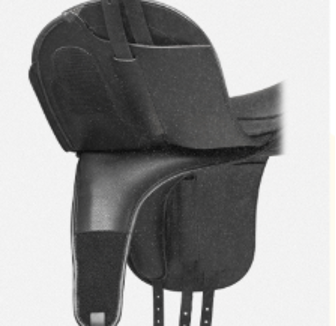
Here’s a useful visual to guide our breakdown of how different aspects of dressage saddles influence rider position, balance, and anatomy.
1 – Monoflap vs. Double Flap
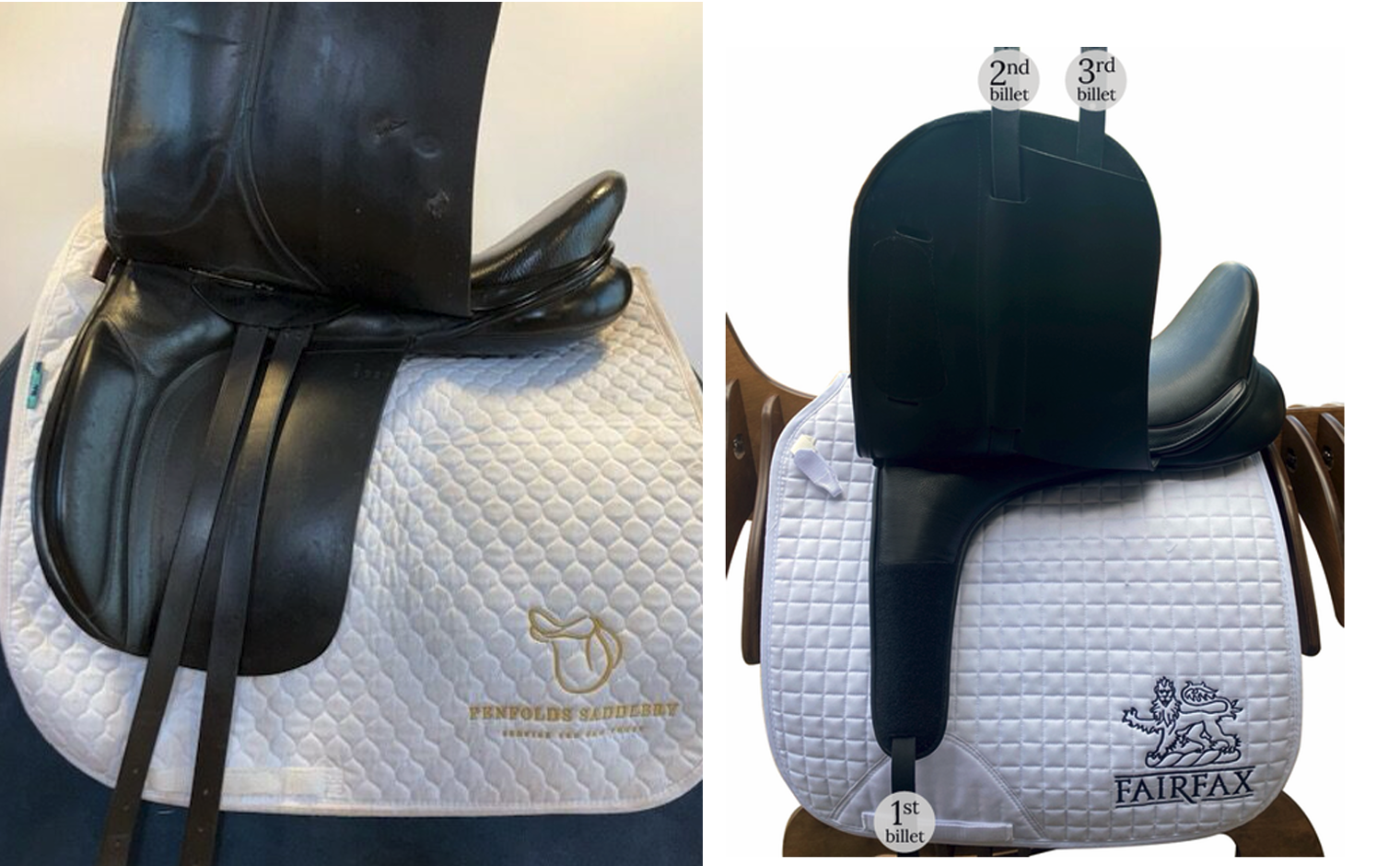
- Monoflap saddles feature a single flap, reducing bulk between rider and horse. This enhances closeness and aids subtle communication via leg aids. Riders often feel more secure and connected, though girthing positions can be less adjustable and may affect fit on certain horses.
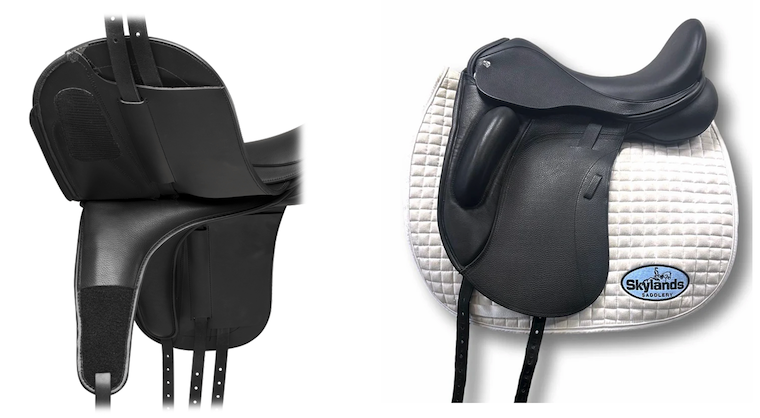
- Double flap saddles, the traditional design, provide more leather between you and the horse. This transparency can give a cushioned feel or allow switching between disciplines. They generally use longer billets and may offer more girthing options
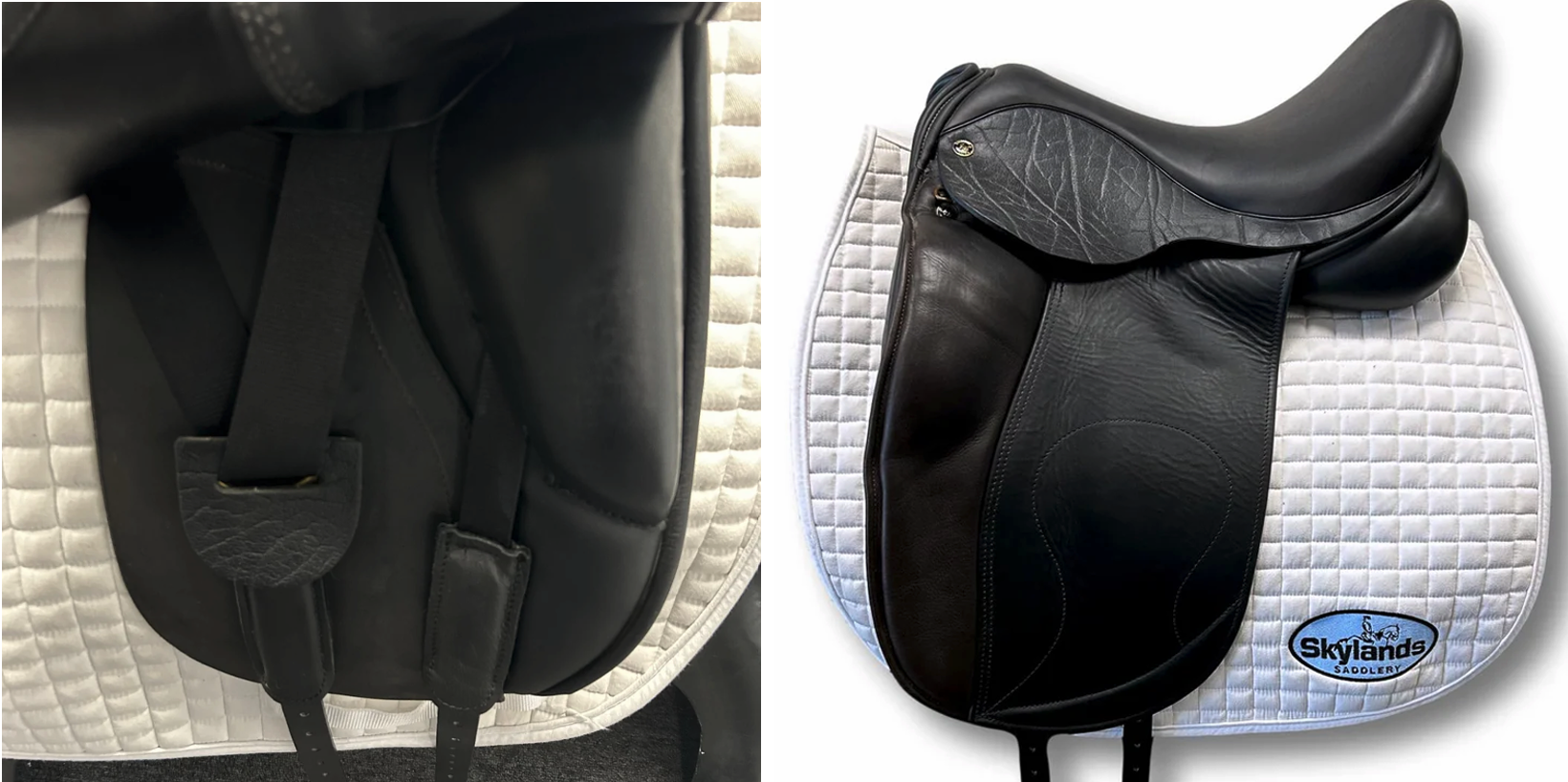
2 – Deep Seat vs. More Open Seat
-
- Deep seat saddles encourage an upright, grounded posture with pelvis over the horse’s center of gravity—ideal for collected work and maintaining stable alignment.
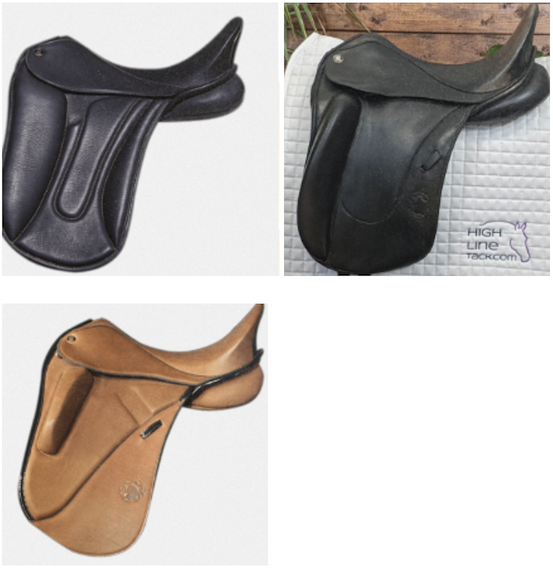
- Flatter or more open seat designs offer more freedom of movement—helpful for riders who prefer a less “locked-in” feeling or who have longer legs and greater flexibility.
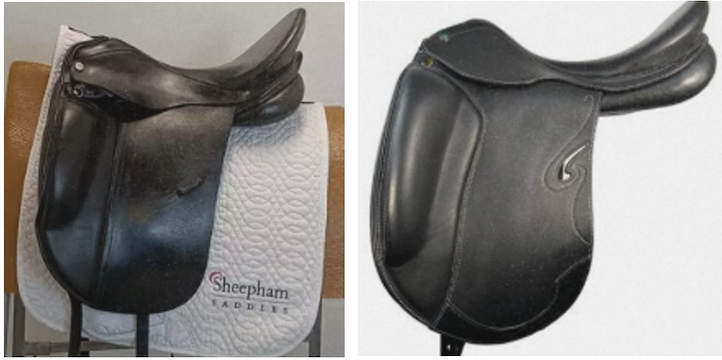
3 – Knee Blocks: Large vs. Small vs. None
- Large blocks anchor the thigh, useful for riders who tend to let their leg swing forward or need extra stability.
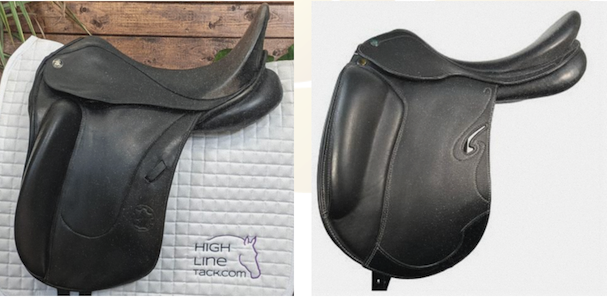
- Small blocks provide gentle guidance without constriction—ideal for riders with longer thighs or more independent leg position.
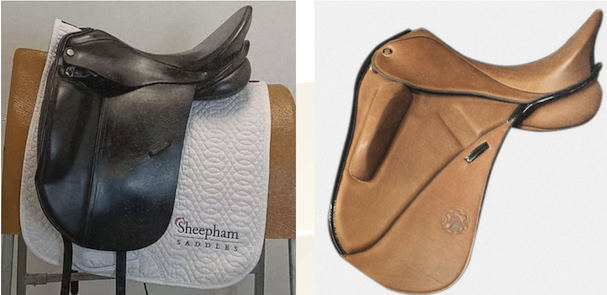
- No blocks allow freedom, but require strong independent seat—useful for advanced riders who don’t need extra support.
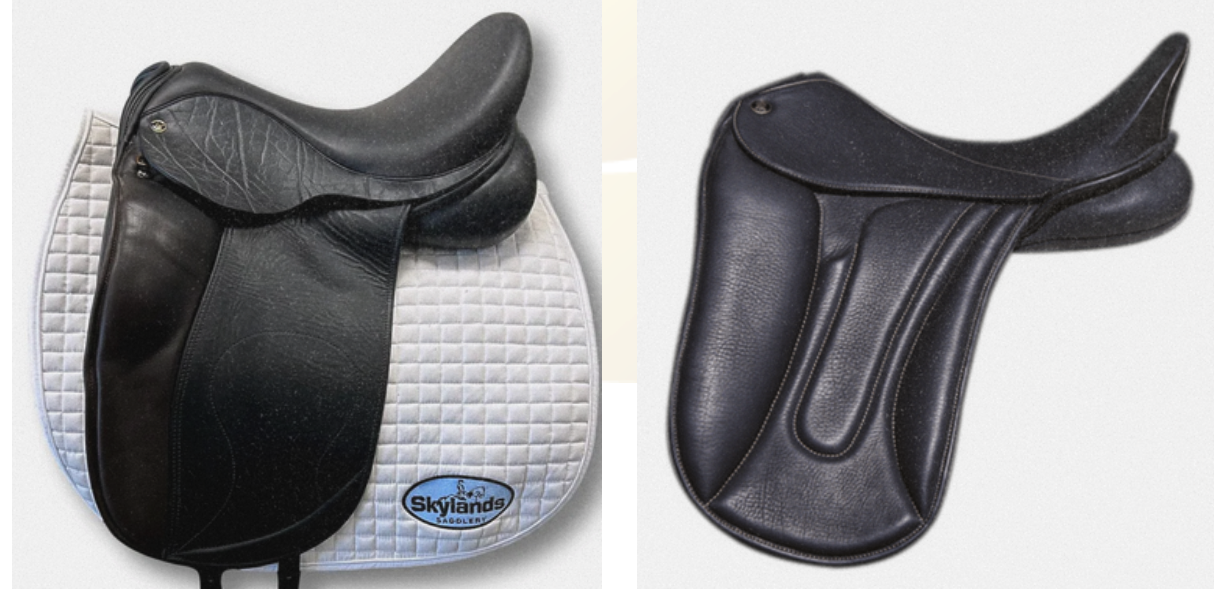
4 – Girth/Billet Placement
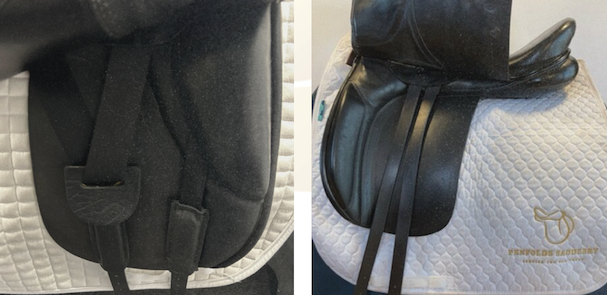
- Monoflaps often come with shorter girth billets and use a short girth—this reduces interference under the leg but may shift weight distribution depending on horse shape.
- Double-flaps typically use long girth billets that position the girth further back, which can suit certain conformations better and provide more adjustability.
5 – Adjustability & Rider Anatomy
Consider how your body shape influences saddle choice:
- Pelvis tilt, hip flexibility, and thigh length affect how you sit and where you need support
- Saddles with adjustable trees, gullet bars, or modular panels (e.g. new modular designs) can better accommodate changes in horse shape—and help align your center of balance.
Rider Impact Summary
| Feature | Impact On Rider Position & Balance |
| Monoflap | Enhanced closeness and refined leg aids;ideal for riders with good core alignment |
| Double Flap | More girthing flexibility and coverage;suits multidiscipline riders |
| Deep Seat | Strong core support and absorption of horse movement; promotes upright alignment |
| Flatter Seat | Greater freedom to shift, favoring riders with flexibility or independent seats |
| Large Knee Blocks | Adds position security; may restrict movement or affect posture |
| Small/No Knee Blocks | More leg movement; best for longer legs or riders building independent balance |
| Girth/flap Setup | Influences how weight and contact are distributed; affects how naturally you balance |
| Seat Bone Alignment | Essential for staying centered over the horse’s moving balance point |
Final Thought
No single saddle is perfect for everyone. Your anatomy—pelvis angle, leg length, core strength and how you balance over the horse dictate what helps or hinders your position. Always try before investing.
A saddle should feel like an extension of you—supportive, balanced, and allowing your center of gravity to flow with the horse. It should not fight against it, but provide support and correct your position.

Leave A Comment
You must be logged in to post a comment.