

Why Scores Look Different Across Countries
At its highest level, dressage is supposed to be one language. The training scale, the collective marks, the emphasis on throughness and harmony—it should all read the same whether you are in Rotterdam or Kentucky. Yet in practice, scores can look very different depending on where you compete.
In Germany and the Netherlands, the sport has a single, clear priority: producing horses and riders capable of winning medals at the very top. Every layer of their system—from pony classes to Grand Prix—serves that purpose. Because of that, the judging culture protects the integrity of the training scale at all costs. A horse that looks spectacular in front but is tight in the back, uneven in rhythm, or lacking throughness is marked down, regardless of how eye-catching the picture might be.
Why? Because in those systems, the goal isn’t today’s 7—it’s tomorrow’s podium. If the horse is to make it to Grand Prix, it must learn to carry symmetry through the whole body, shorten the wheelbase without tension, and sustain a circle of energy that stays unbroken. These things are non-negotiable if the horse is to last.
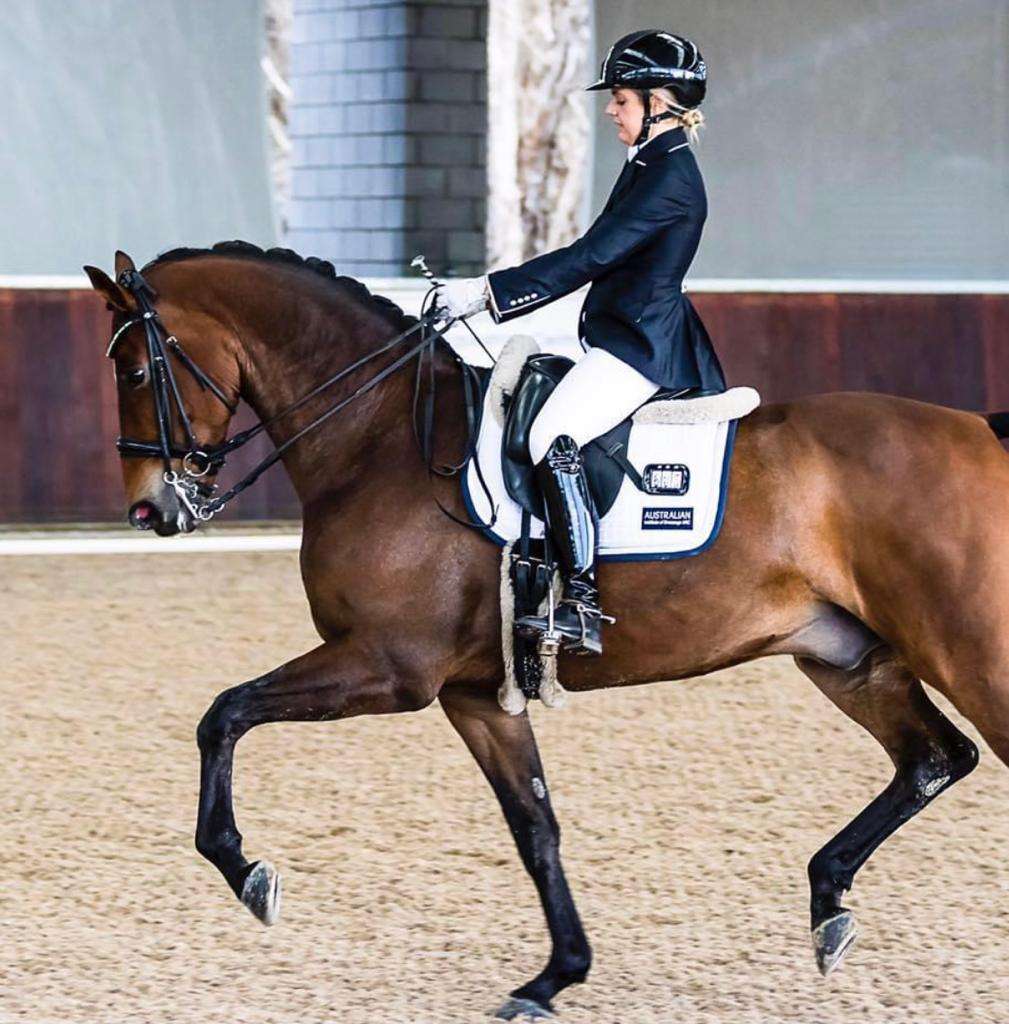
By contrast, in countries where the sport is more amateur-driven—like Australia, the UK, or the US—the priorities can shift. The majority of riders are not aiming for the Olympics but for national shows, amateur titles, or personal milestones. Judging, consciously or unconsciously, adapts to reflect this culture. A horse that traces the pattern of the movement, shows a big front leg, and more or less stays in frame may receive generous marks even if the topline is braced or the shoulders are not truly organised. The standards bend toward accessibility, toward encouraging participation, rather than insisting on medal-level precision.
This isn’t to criticise; every country must serve the riders it has. But there is a consequence. If you are rewarded early for flat work—shapes without throughness—you may believe you are progressing faster than you really are. And when the time comes to ride in front of a stricter panel—whether internationally, or even under a foreign judge at home—the marks crash. The illusion of progress collapses under the weight of reality.
It is like being told you are fluent in a language because you can repeat a few phrases, only to find yourself lost when faced with native speakers.
Yet here is the irony: even in Germany and Holland, where the judging is unforgiving and the focus is relentlessly on the way of going, amateurs still score spectacularly. Why? Because the basics work for everyone. When the horse is truly symmetrical, when the topline is long and swinging, when the circle of energy flows without blockage—then even an “ordinary” horse produces extraordinary results.
This is the point so often missed. A stricter system doesn’t close doors to the amateur; it opens them. It ensures that progress is real, that the horse is healthier for the work, and that the rider doesn’t fall flat when faced with a tougher panel.
The question then is not whether lower standards are kinder to riders—it’s whether they are honest. Would we rather be rewarded early for shapes and gestures, only to hit a ceiling later? Or would we rather be scored with progression in mind from the start, so that every step forward is one we can keep when the level rises?
Dressage, at its heart, is a system of physiotherapy for the horse. To dilute that system is to dilute its benefits—soundness, longevity, real gymnastic development. To uphold it, even if the marks feel stingy in the moment, is to build something that will last.
And perhaps the greatest reassurance is this: the same standards that prepare medal-winning horses also elevate amateurs. If the basics are truly correct, the results—whether ribbons, soundness, or harmony—speak for themselves.

Leave A Comment
You must be logged in to post a comment.