

The Canter Transition: Lift, Don’t Rush
First, let’s set the tone: Canter is not a faster trot.
If you ride the canter as faster, you’ll just ruin the trot, stretch the wheelbase, and let the horse tip onto the forehand. The canter is a three-beat gait with suspension — it’s a lift into a new gear, not a shove forward in the old one.
“You ride up into canter, not along into it.”
- Why The Canter Transition Is A Training Mirror
A correct canter depart tells me:
- Weight is even in all four feet
- The wheelbase is already short enough for lift
- The neck and back are soft
- The rider is organised
- When To Ask
From trot, you want the outside hind just about to lift — that’s the first beat of the canter stride.
In that split second:
- Rebalance to check the wheelbase and connection — remembering, if your horse is truly balanced the wheelbase is already short enough. Therefore, this is only a correction if something isn’t quite connected.
- Give the canter aid (see canter aid timing).
If you’re early, you’ll ask before the strike-off leg is free. If you’re late, the moment’s gone and the horse will scramble.
“Miss the moment, miss the canter.”
- The Preparation
Step 1 – Rebalance
This isn’t slowing down. It’s a moment to say, “Are we truly balanced in all four feet? Is the wheelbase already short enough?”
If yes, you won’t feel the need to visibly adjust. If not, you quietly shorten the wheelbase just enough to put the horse back into balance.
The “before” matters more than most riders realise. Ask yourself:
- Rhythm: Is it steady?
- Wheelbase: Is it already short enough? If the horse is truly balanced — no extra prep needed. If not, rebalance and shorten slightly before asking.
- Doors open: Can I adjust the shoulders without the neck bracing and the back blocking?
“Loading the spring without breaking it.” The horse feels coiled and ready, but relaxed.
- Why The Wheelbase Concept Matters
When the wheelbase is right:
- The hind feet step closer under the centre of mass, keeping the horse balanced on all 4 feet.
- Weight is even on all four feet.
- Shoulders are light and free to lift.
- The first canter stride is up and forward, not just a lunge and only up. BOTH up and forward are key.
If you have to shorten the wheelbase before or after, it’s simply a sign the connection wasn’t perfect at that moment.
REMEMBER: This could be due to the level of the horse. It could be a misstep. Do NOT always blame yourself. Riding is always about constant checks and balances.
As you go up the levels, you’ll be adjusting the wheelbase so subtly and so often that you’ll rarely need an obvious “shorten before” — it will be there already.
- Canter Isn’t Faster — What Does The Transition Feel Like
Here’s a breakdown of how the canter transition feels from collected trot vs working trot vs walk, including from the rider’s seat:
From Collected Trot To Canter
- Feel: Uphill, light, and precise.
- The horse is already engaged and balanced.
- The transition has more range of movement, ie it feels more upward into the first canter stride then from working trot
- Rider sensation: Like sitting on a coiled spring that releases. Minimal seat or leg needed if horse is truly on the aids. It can almost be a “thought”.
From Medium Walk To Canter
- Feel: More forward, slightly flatter.
- The walk-to-canter is tricky because there’s no moment of suspension and no trot to help build impulsion — so the horse must sit, push, and strike off from a more static gait. It is important not to pause or stop the walk before the transition. It will feel less “exciting” and more simple than from other gates.
- Rider sensation: You might feel like you need to “organize” more — this is due to the fact many horses struggle to truly collect in the walk. Keeping the walk true before can require more rider help. When done well, it feels like a collected transition from nothing. If correct it feels like a lift underneath your seat bones.
From Working Trot To Canter
- Feel: Slightly flatter than from collected trot.
- The horse is in a longer frame with less cadence than in collected trot, so the transition may feel like it has less suspension or jump.
- There’s usually more movement forward than up, and sometimes a small “pull” feeling if the horse leans on the hand or isn’t balanced enough. There is a need to be more active as a rider helping the horse to rebalance during and after the transition.
- Rider sensation: You might feel like you need to “organize” more, prepare the balance, and keep the rhythm of the trot to encourage a clean step into canter.
Comparison Summary
| Transition From | Feel | Common Issues | Rider Aids Needed |
| Collected Trot | Light, uphill, springy | Over-aiding, rushing | Subtle seat/leg, very prepared |
| Working Trot | Flatter | Leaning, delayed, rushing, unbalanced | Clear and guiding balancing aids |
| Walk | Light, uphill, springy (similar to collected trot) | Trotting first, sluggish, tight walk prior | Balance over all four feet very important, clearly infront of leg, open back |
- Common Mistakes & Fixes
Mistake 1: Leaning forward
→ Stay tall; “chest up, not forward.” It is NOT faster.
Mistake 2: Bending the neck
→ Canter strike can be done on the straight. NO additional bend needed.
Mistake 3: Quarters swinging out or in
→ Don’t shove the quarters or lose the shoulder control. Remember, what the quarters are doing will act as a looking glass to how much control of the shoulders you have. If in doubt, adjust the shoulders to find straight.
Mistake 4: Changing rhythm before the aid
→ Rebalance earlier so the last trot steps match the rest.
- The Rebalance Before And After
Before: Check the wheelbase — if it’s already short enough, do nothing; if not, adjust quietly.
After: Keep that same wheelbase so the canter starts and stays balanced.
“The first stride writes the whole chapter.”
- At The Higher Levels
As you progress:
- Wheelbase checks become near-invisible
- The horse stays in self-carriage between and within movements
- Preparation within the gait fades because you’re always making micro-adjustments
That is the goal: your horse steps into canter already balanced and already with the correct wheelbase, because you’ve been keeping it there all along.
“Make the difficult easy, then make the easy beautiful.”
Canter Aid Timing
In this section you’ll learn:
- How the horse’s legs move at the moment of the aid
- What it feels like in rising trot
- A clear table-style breakdown of each limb
- Clear instructions for riders trying to feel the timing
In Trot
Trot is a 2-beat gait:
- Beat 1: Left hind + right fore together
- Beat 2: Right hind + left fore together
If you’re asking for right lead canter, your outside hind is the left hind. That’s the leg that must push off first in the canter stride.
Timing The Aid
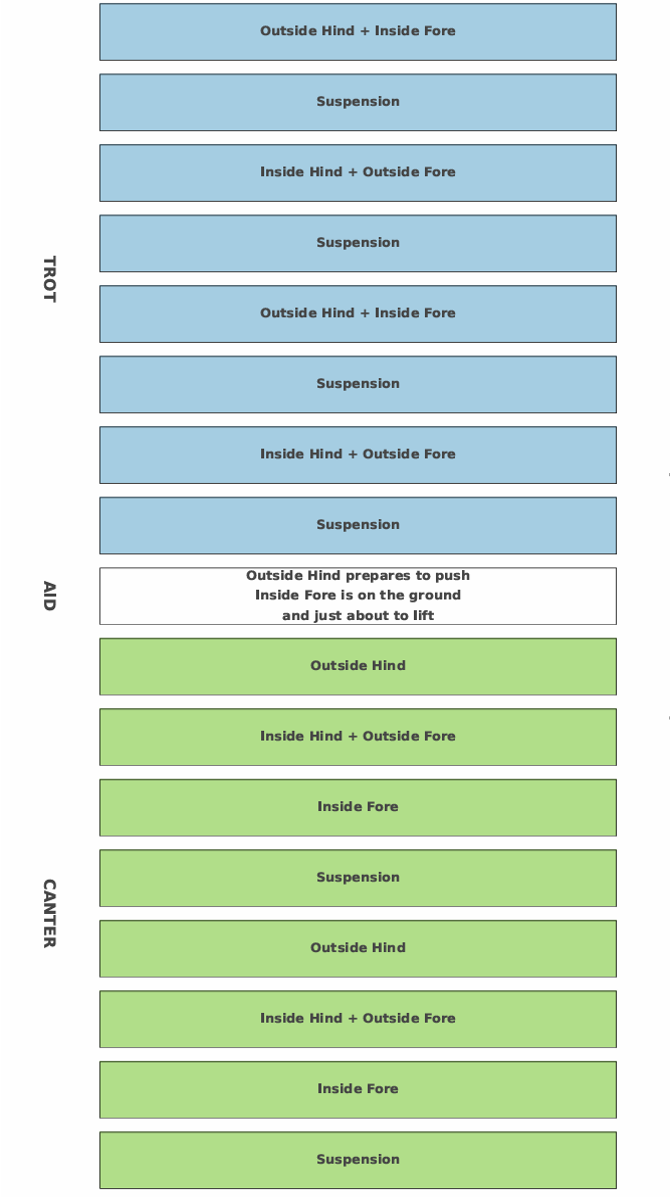
The moment to give the aid is when the outside hind is just about to leave the ground in trot — i.e., at the very end of the diagonal pair step involving that hind leg.
This gives the horse one split-second to respond so that the outside hind is the first beat of canter.
What does this feel like in sitting trot?
- You’ll feel your outside seat bone rise slightly as the horse’s outside hind pushes off the ground.
- Give the aid just before this rise peaks.
What does this feel like in rising trot?
- If you’re rising on the correct diagonal (rising when the outside front leg and inside hind are moving forward), the moment to give the aid is as you’re sitting down — just before you rise — because this is when the outside hind and inside fore are on the ground and about to push.
- The aid happens in the sit phase of rising trot, on the correct diagonal.
What Are The Front Legs Doing?
At the exact moment you apply the outside leg aid:
- The inside foreleg is still on the ground, finishing its role in the diagonal pair.
- The outside foreleg is off the ground, either in swing or already in the air.
- You are at the end of the diagonal step:
- The outside hind is just about to push off
- The inside fore is about to lift
This is the sweet spot for the canter aid because it sets up the first beat of the canter cleanly from the outside hind.
What Each Leg Is Doing At The Moment Of The Canter Aid:
| Leg | Action At The Moment Of The Aid |
| Outside hind | About to push off — becomes first beat of canter |
| Inside fore | On the ground, just about to lift — end of diagonal in trot |
| Outside fore | Already off the ground — swinging forward |
| Inside hind | Already lifted — was on the ground in the previous beat |
Leg Position & Aids
- Outside leg: Slides slightly behind the girth, asking the outside hind to step under, push, and take the lead into the canter. It also remains ready — along with the inside leg — to address any “behind the leg” feeling, encouraging forward if needed.
- Inside leg: Stays at the girth in a passive, stabilizing role. It also contributes, alongside the outside leg, to correcting sluggishness or loss of forward intent.
- Reins: Inside and outside reins work together to ensure:
- Train tracks — the horse is straight (no falling out or drifting)
- Balance — weight is evenly distributed:
- Front/back = 50/50 across forehand and hindquarters
- Left/right = 25% on each leg (ideally)
- Core: Imagine you’re lifting your own chest into the canter with the horse.
Example For Right Lead Canter
- Outside hind = left hind
- Watch/feel for your left seat bone rising (in sitting trot), or as you’re sitting in rising trot
- Give the canter aid just before that moment:
- Outside leg slides back and applies pressure
- Inside leg supports at the girth
- Reins maintain straightness and balance
At The Moment You Give The Outside Leg Aid
You’re aiming to give the aid just before the outside hind leg leaves the ground in trot. This is at the end of the diagonal pair phase involving the outside hind + inside fore.
At that exact moment:
- The inside foreleg is still on the ground, finishing its part of the diagonal pair.
- The outside foreleg is off the ground, either in flight or preparing for the next stride.
- You’re at the end of the diagonal step:
- Outside hind is pushing off
- Inside fore is also just about to leave the ground
In other words, you apply the canter aid just as the inside fore is about to lift, which helps allow the horse to cleanly lift into canter, starting with the outside hind as the first canter beat.
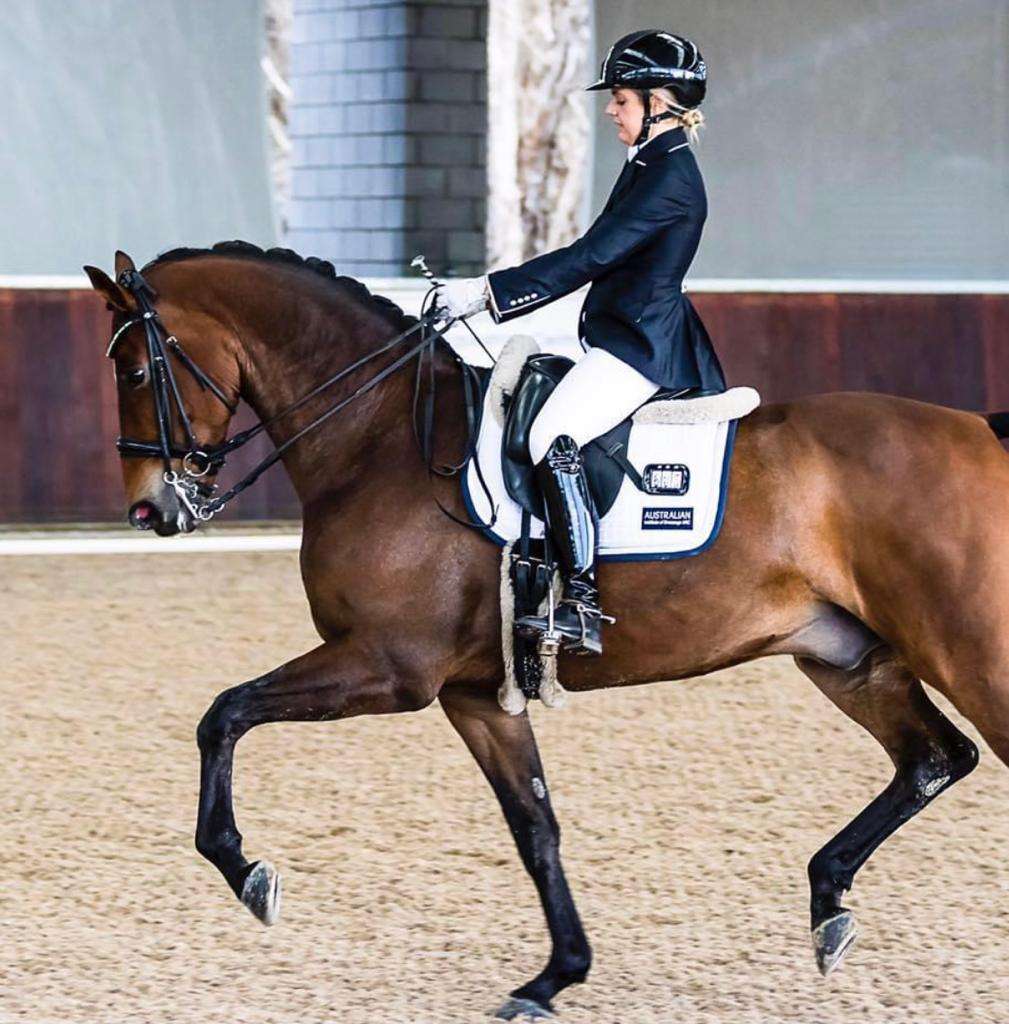
Timing The Outside Leg Aid For The Canter Transition
(Footfalls In Each Phase)

Leave A Comment
You must be logged in to post a comment.