
Utilising Sports Psychology In Dressage
Dressage is, at its essence, a sport of decisions. Every stride requires a choice: balance or forward, line or bend, lift or soften.
Yet under pressure, the brain is easily tricked. Sports psychology shows us that when riders focus on the wrong variable, like contact instead of balance, they treat the symptom, not the cause. The result is decoration, not development.
Elite athletes use cue words to cut through complexity. Sprinters think “explode,” divers think “soft entry,” tennis players think “brush up.” These micro-cues reduce cognitive load, anchor attention to the correct variable, and allow the body to act automatically.
In our riding, acronyms like ELE, LOF, and BASE serve the same function. They are not abstract theories; they are practical tools that shape attention so the right decisions are made in the right moment.
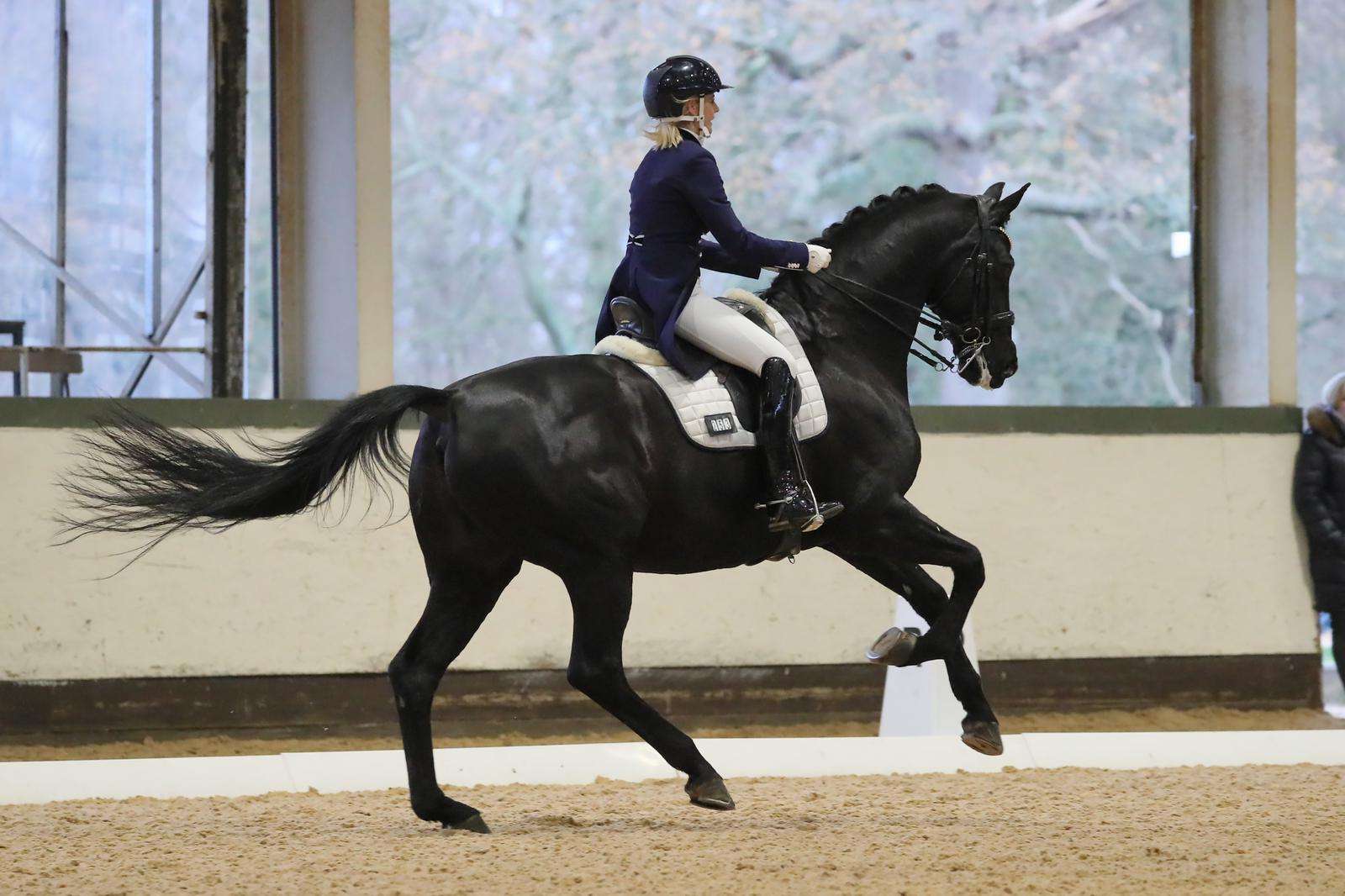
By embedding these cues, we ensure our riding is both psychologically accurate and biomechanically curative. Instead of lifting the head for a picture, we elongate the back for true posture. Instead of chasing energy, we recycle it. Instead of hoping for “flow,” we create it stride by stride. These acronyms are the rider’s decision-making compass — turning dressage into medicine, not just choreography.
Focus Triggers – The Words That Trigger Correct Focus Under Pressure
BASE – The Medicine Point
- B = Back elongated → Swinging topline, posture not picture.
- A = Abs + sling engaged → Thoracic sling lifts the ribcage, shortening the wheelbase.
- S = Shoulders upright → Anchor point that makes the topline usable.
- E = Energy recycled → Hind legs step under, energy loops back through the hand.
BASE is the gymnastic foundation. Each stride built on BASE strengthens the horse’s body, prevents overload, and builds longevity.
LOF – The Diagnostic Tool
- Line → Keep the horse travelling between two tracks, equal weight in all four feet.
- Organisation of shoulders → Shoulders must remain upright and in front of the hips.
- Forward Intent → Forward isn’t speed; it’s carrying power. If you stop for one stride, does the horse keep going?
ELE – The Elevation Edge
- This is the upward, soft cue that says: “Stand tall with me.”
- It refines balance by adding lift and lightness without blocking forward energy.
- ELE is the final 5% — the polish that transforms good balance into expression. Use it after you have the line and organisation in place, to fine-tune transitions, add softness, and create height in movements.
Together ELE, LOF, and BASE form your mental compass.
They are your shorthand for focus, your checklists under pressure, and your guarantee that each decision you make serves not just the test in front of you, but the body and mind of the horse you ride.
A Deeper Understand Of Sports Psychology And Dressage
Dressage is, at its heart, a system of decisions. Every stride is a micro-choice — where to place the shoulders, how to recycle energy, when to soften, when to collect. Yet the effectiveness of those choices depends not on how many movements we practise, but on whether the right decision is made at the right time. This is where sports psychology, particularly the science of attentional control and decision-making under pressure, gives us both language and tools to elevate our riding.
One of the most studied models in sports psychology is selective attention. Elite athletes learn not simply to focus harder but to focus correctly, shifting their attention between broad and narrow, external and internal cues.
Applied to dressage, this means knowing whether the issue at hand is balance, throughness, or frame — and then attending to that variable, not another. A rider who notices heaviness in the hand and thinks, “I must fix contact,” is narrowing on the wrong variable if the true issue is balance in the shoulders. Like in medicine, treating the symptom instead of the cause will not heal the body.
The parallel to clinical psychology is direct. Cognitive-behavioural models emphasise accurate appraisal before intervention. Mislabel the problem, and the chosen intervention reinforces dysfunction. In horses, this looks like lifting the head to “place the poll” instead of reshaping posture through circular energy. One is cosmetic; the other is curative.
Research into error detection and correction loops shows that the brain relies on a constant feedback system: sense an error, adjust, retest. This is identical to how the horse learns balance when ridden gymnastically. Each rein aid, when used within the pulley system, acts as feedback through the hyoid chains — lengthening the topline, shortening the wheelbase, and redistributing load. If the rein is treated only as steering, the loop collapses; if treated as medicine, posture reshapes.
This is why true dressage insists that flat work rehearses lines while dressage remodels posture. Just as sports physiotherapists use mobilisation and symmetry to protect athletes from injury, correct dressage functions as daily physiotherapy. Every stride distributes force, maintains elasticity, and prevents overload.
Elite sport psychologists often prescribe cue words to simplify complex decision-making under stress. Sprinters use “explode,” divers use “soft entry,” tennis players use “brush up.” These cues reduce cognitive load and direct the athlete toward the correct body pattern. In our system, LOF — Line, Organisation, Forward Intent — and ELE — Elevation Edge — serve the same purpose. They are not abstract theories; they are scientifically grounded attentional cues.
Line is an external focus cue. Studies show that external cues on movement outcome are more effective than internal ones on body parts. By focusing on the line between shoulders and hips, riders align posture without overthinking the limbs.
Organisation is a narrow focus cue: re-choosing where each shoulder belongs keeps micro-errors from compounding into breakdowns.
Forward Intent is a psychological safeguard against passivity. Like the approach cues in motivation theory, it ensures the horse carries, rather than the rider pushing.
Elevation Edge — the simple “stand tall with me” — is the positive-affect cue. Research shows that emotions and posture are bidirectional: invite lift, and both body and mind follow. ELE transforms “hold it together” into “rise with me,” a cue that lightens, softens, and sustains rhythm without tension.
Psychologists studying decision bias warn of the “availability heuristic”: we over-focus on what is most visible, not what is most relevant.
In dressage, this explains why riders obsess over head position — it is visually obvious, while back posture is harder to see.
Yet as the evidence shows, lifting the head creates decoration, not medicine. The consequences mirror clinical outcomes. Just as misapplied rehab exercises delay recovery, misapplied training builds imbalance into the body.
The second trot is the perfect test case. It emerges not from adding more but from sustaining balance long enough for energy to recycle into suspension. Sports science calls this a flow state — a condition where automaticity, rhythm, and balance converge. It cannot be forced; it must be shaped. When the circle of energy is continuous, even an ordinary mover produces extraordinary steps. When balance is skipped in favour of spectacle, the gait collapses under pressure.
In sports psychology, the mantra is clear: accuracy before intensity. In dressage, the same law applies. The rider who makes correct decisions — diagnosing the true issue, choosing the right rein aid, and applying the right cue at the right time — builds not only performance but longevity.
The horse’s body is preserved, the rider’s system is trustworthy, and the movements emerge as by-products, not tricks. Dressage in this sense is not choreography; it is medicine, guided by psychology. Every stride is a decision. Make it the right one, and both horse and rider step into the arena not with decoration, but with authentic gymnastic transformation that endures.


Leave A Comment
You must be logged in to post a comment.