
Transitions Within The Pace – Building The Horse’s Powerhouse
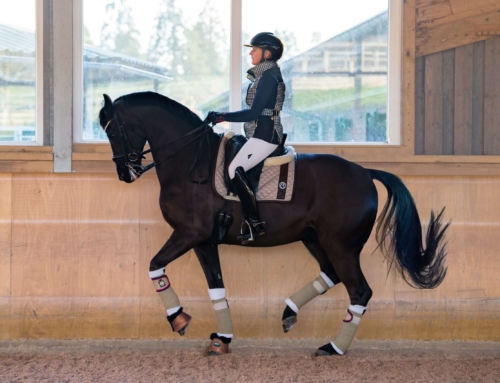
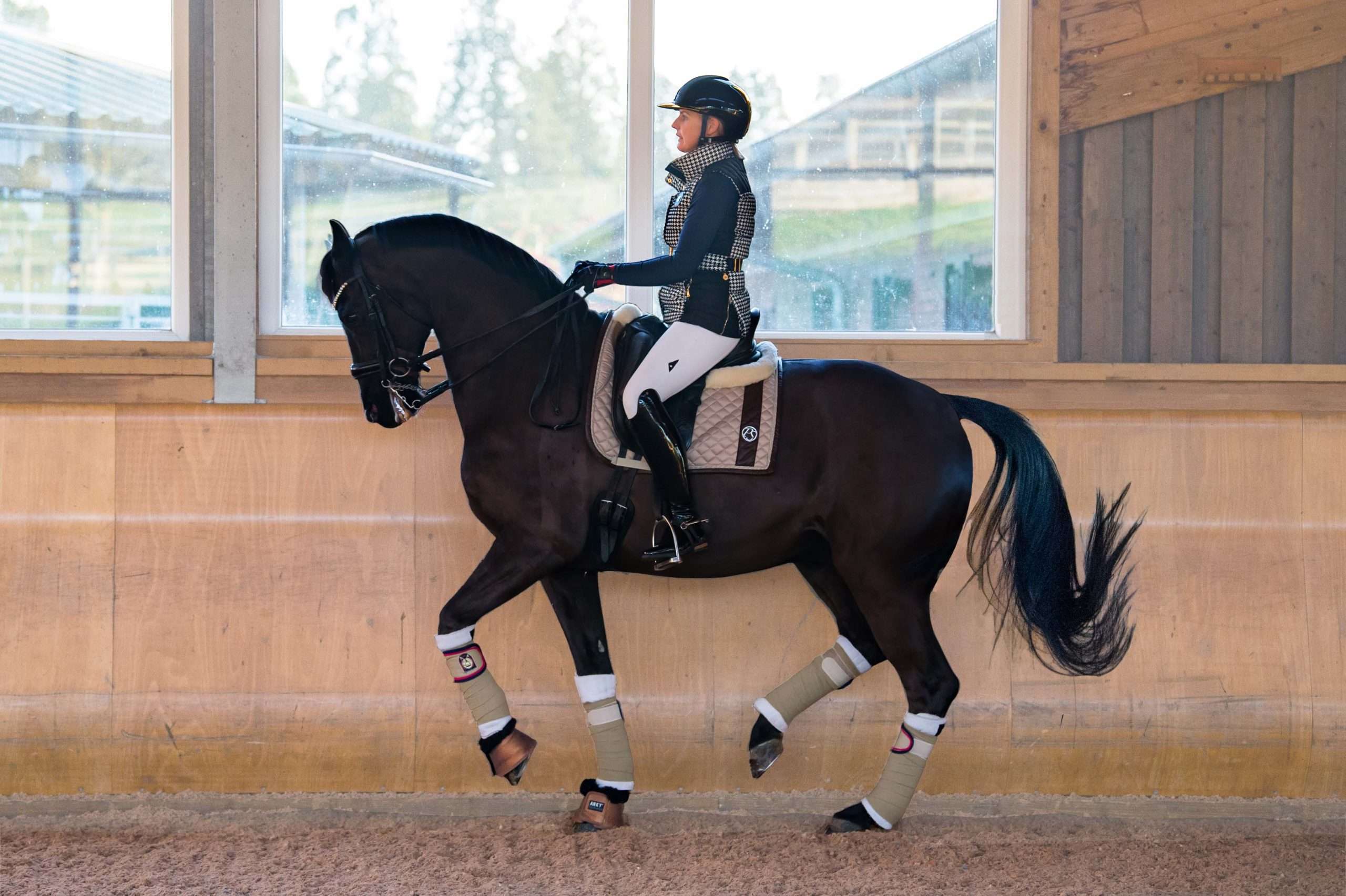
One of the most underestimated tools for creating truly developed paces and further collection is the art of playing with the tempo within the gait you’re already in. Not blasting from trot to canter, or walk to trot — but sculpting the shape and energy of the same gait like a potter refining clay.
When you ride these micro-transitions, you’re constantly asking the horse to shift his weight and find a new balance in all four feet — then to carry that new balance forward into the next stride.
Remember: Alicia’s Elevation Edge (E.L.E.) –
The split-second aid that keeps every stride uphill.
Micro-Adjusting the Shoulders – Apply subtle, precisely timed rebalancing to keep the shoulders light, even, and squarely in front of the hind legs. These are tiny, feel-based corrections — a touch more here, a softening there — that stop the horse from tipping forward, drifting sideways, or leaning into one rein. Think of them as gentle “stand tall” cues that keep the forehand lifted so the stride’s elevation remains effortless.
Why It Works
By subtly asking for the horse to change his stride you’re activating a cycle:
- The lengthening asks the joints to open, stretch and push.
- The shortening demands they close, lift and carry.
- Each change keeps the horse on the aids, keeps the back swinging, and prevents the gait from becoming flat or mechanical.
“The moment before you lose balance, you must fix it.”
These within-pace transitions are your constant tune-up/ rebalance.
How It Develops Collection
True collection is not slowing down — it’s compressing energy without losing elasticity. By repeatedly adjusting tempo within the pace, you teach the horse that changing the steps is NOT slowing the tempo, it isn’t a shutdown, it’s a rebalance. The wheelbase shortens, but the power stays alive.
You’re also building muscle memory for the hind legs to step under without resistance.
“Recycling the energy” — instead of letting it leak out the front, you send it back through the body in a circular loop: from the shoulders, through the body to the hind, and forward again.
Rider’s Role
Your job is to measure, not manhandle, the stride. The half-halt (or “rebalance”) is your steering wheel here. Too much hand, and the front end gets stuck. Too much leg, and you’ll just run onto the forehand.
The magic is in feeling the moment the horse is well balanced across all feet, then asking for either more reach or more sit — without breaking that balance in all four feet.
“Close the frame, then open it — but never let the shape collapse.”
End Goal
When you play with tempo this way, the paces gain expression, suspension, and that “look at me” quality.
Extended trot feels like it has springs under it; collected canter feels like it could lift off into pirouette at any moment.
As you climb the levels, you’ll find you need less obvious preparation for big movements because your horse is always ready — the wheelbase is already short enough, the energy already balanced in all four feet.
That’s when collection stops being something you create and starts being the horse’s natural way of going.

Leave A Comment
You must be logged in to post a comment.